
Iron rich foods for pregnancy & anemia
Looking to boost your iron stores in pregnancy? These are the top iron rich foods for pregnancy from a Registered Dietitian Nutritionist.
Types of iron and significance for absorption
Iron is an essential mineral to support a healthy pregnancy. It is the core component of hemoglobin, which transports oxygen through out the blood and body. During pregnancy a woman’s iron need goes from 18 mg/day to 27 mg/day to help support the increase in blood volume required to have a healthy pregnancy.
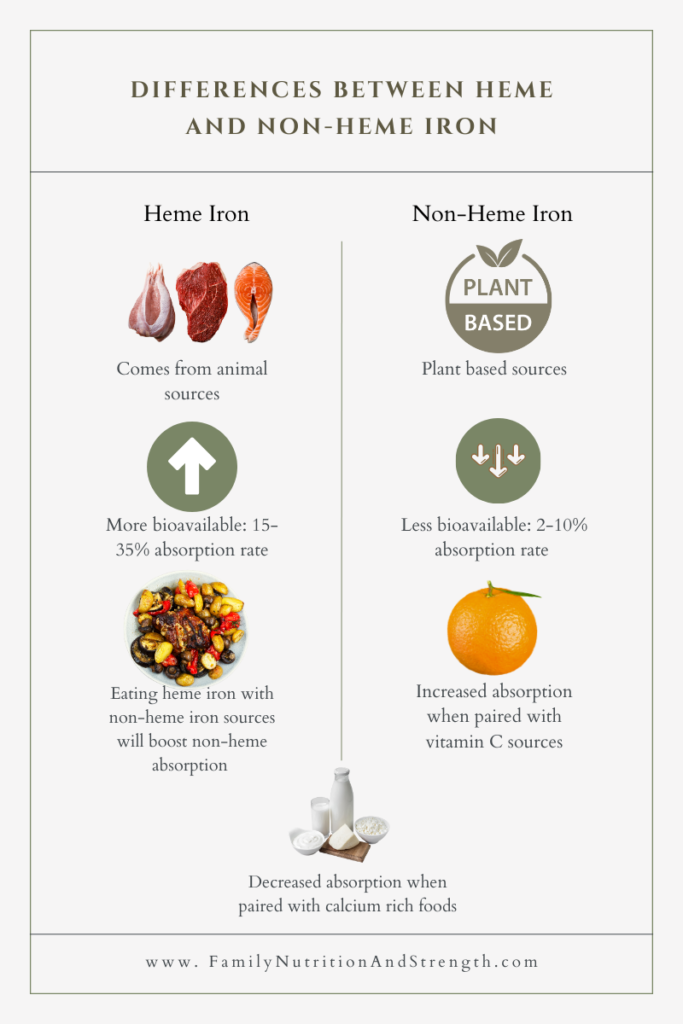
There are two types of iron found in food:
1. Heme iron: found in animal based foods like lamb, beef, chicken, turkey, etc
2. Non-heme iron: found in beans, legumes, whole grains, etc
Heme iron is more readily absorbed by our bodies in a ratio of 15-35% while non-heme iron from plants and fortified foods is less readily absorbable at a ratio of only 2-10%. Therefore if you have found yourself deficient with pregnancy anemia and you’re not Vegan or Vegetarian, you will likely want to add in more heme iron sources. Another strategy is pairing heme sources with non-heme sources of iron which has been found to boost absorption rates from our non-heme sources. (Yes, you can still eat Vegetarian or Vegan if well planned, read more below!)
how to increase iron as a Vegan or vegetarian during pregnancy
Since non-heme iron sources are less bioavailable than heme iron sources it takes careful planning to ensure you are meeting your iron needs during pregnancy as a Vegan/Vegetarian. First, try adding a vegetarian based iron supplement through out your pregnancy to support increased iron needs. This is one of my favorites: but always reach out to your Dietitian Nutritionist or OBGYN to see if it’s a good fit for you before adding any supplement in.
Additionally, we can pair vitamin c rich foods with non-heme iron sources: bell pepper and lentils, orange juice and fortified cereal, quinoa and bean salad with kale and oranges, etc.
Signs of iron deficiency anemia in pregnancy
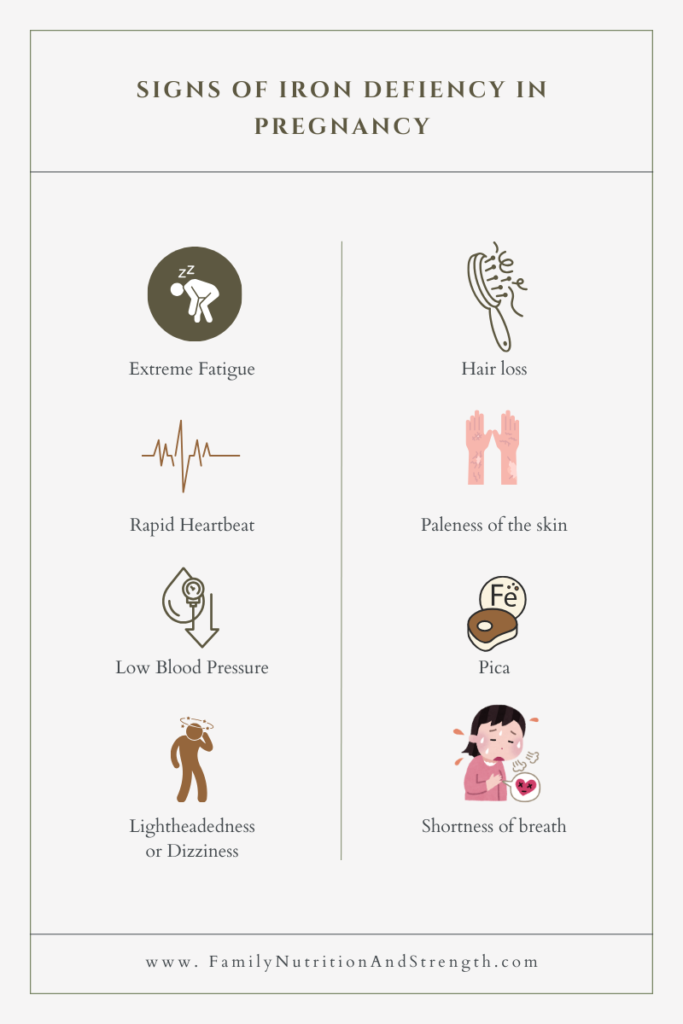
- Extreme Fatigue
- Light headedness or dizziness, especially upon sitting to standing
- Rapid heartbeat
- Low blood pressure
- Shortness of breath
- Pica: cravings for non-food items like wood, ice chips, etc
- Sensitivity to cold
- Paleness of skin
- Hair loss
- Difficulty concentrating
Risks of iron deficiency in pregnancy
Research shows that being iron deficient in pregnancy without correction increases your chances of many adverse pregnancy outcomes:
- Low birth weight or preterm labor (that is before 37 weeks gestation)
- Increased maternal illness
- Increased risk of maternal hypertension or preeclampsia
- Higher likelihood of needing a C-section
- Increased risk of infection post-labor
- Increased risk of postpartum hemorrhage
- Long term effects on babies brain development
Best iron rich foods for pregnancy
Heme iron rich foods for pregnancy
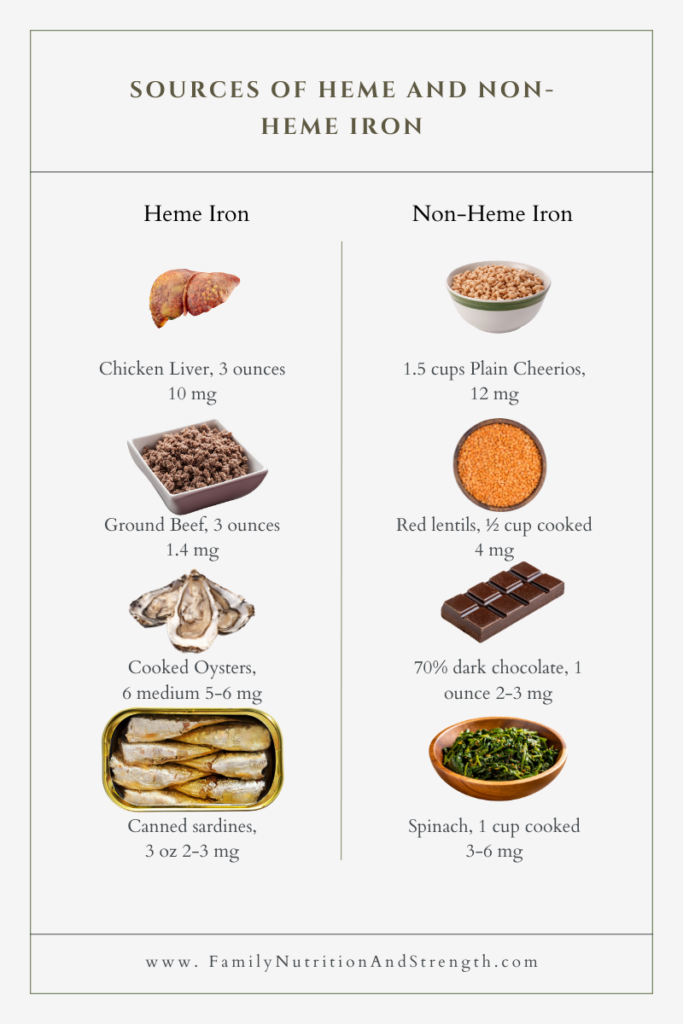
- Chicken liver or beef liver: with 9-10 mg per 3 ounce serving of heme iron, this a great food to add in during pregnancy to support the increased demand of pregnancy. My fellow Registered Dietitian, Lily Nichols has a whole blog article on how to make liver at home. You can read it here.
- Red Meats: Ground beef or lamb have around 2-3 mg of heme iron per 3 ounce cooked serving. Choosing extra lean versions 2-3 times/week will help keep saturated fat intake low, which is optimal for overall heart health.
- Canned sardines: with 2-3 mg iron per 3 ounce serving, these nutritional powerhouses are safe and effective during pregnancy to increase iron stores. Other benefits are that they are rich in omega three’s and low in mercury exposure.
- Canned tuna– 3 ounces has 1.4-1.7 mg of iron. Choosing canned light tuna a few times per week is safe during pregnancy. Other benefits is that it is rich in b vitamins, vitamin d and omega three’s.
- Chicken thighs: Choosing chicken thighs or drumstick over the white breast has increased iron content, around 1.5 mg/chicken thigh. Additionally, you’ll get more zinc and b12 by choosing thighs over breasts.
Non-Heme iron sources for pregnancy
- Red lentils: 1/2 cup cooked red lentils contains 4 mg iron. Pair it with vitamin c sources like bell pepper or citrus juices to increase bioavailability. You’ll also be getting nutritional benefits like folate and fiber when consuming lentils!
- Black beans: 1 cup cooked black beans 3.6 mg iron. Try these as black bean fritters with spinach and tomato or as a soup with tomatoes, bell peppers and onions.
- Quinoa: 1 cup cooked quinoa has 2.8-5 mg iron it. To increase absorption pair with vitamin c rich veggies. You can try a tasty quinoa, bean salad loaded with lemon vinaigrette, tomatoes, cucumbers and feta cheese or a hearty quinoa chili with sweet potatoes, black and kidney beans, tomatoes, bell peppers and avocados.
- 70% Dark chocolate: 1 ounce of 70% cacao dark chocolate has 2-3 mg of iron. For added absorption try your strawberries dipped in the chocolate, or pairing it with raspberries and blueberries.
- Spinach: Perhaps Popeye was onto something here, as 1 cup cooked spinach houses 3-6 mg of iron. Pair sauteed spinach as a side of any of your dinners, or throw some in a tofu or egg burrito in the morning with bell peppers or an orange on the side.
- Fortified cereal: Iron fortified cereal, while “processed” are great ways to increase your dietary intake of iron. Plain cheerios for example, will be low in added sugar but still pack 12.6 mg of iron per 1.5 cup serving. Try adding to your morning yogurt with berries or on top of a smoothie for an added iron boost whilst still getting the benefits of the vitamin c from your berries and increasing iron absorption.
- Whole Grain Breads: 1 slice of whole grain bread has around 1 mg of iron. If you’re having a quick lunch, a tuna sandwich on whole grain bread or a chickpea sandwich to keep it vegetarian/vegan, with fresh kale and tomatoes is a yummy iron-packed way to get it in.
- Kale: Along with all the benefits of dark leafy greens during pregnancy, kale is high in non-heme iron at 1.6 mg per 100 g serving. Try throwing this into your morning smoothie, or pairing it with your quinoa salad for a hearty dose or non-heme iron!
- Sweet potatoes: Sweet potatoes are a warm comforting fall and winter food that can pack 1.1 mg of iron per medium potato. Try air-frying these to go alongside a girl dinner or using them as “croutons” air-fried on top a Harvest bowl salad.
- Pumpkin Seeds: 1 ounce packs 2.3 mg of iron. Try adding these to your morning porridge or on top of any soups/salads like mentioned above for a boost of iron.
Best ways to boost your iron stores while pregnant
To summarize this blog post, the best ways to boost your stores of iron during pregnancy are to consume enough iron rich foods, in addition to taking your prenatal vitamin with iron in it. As the the RDA for iron goes from 18 mg/day to 27 mg/day, it can be quiet challenging to meet this through food alone so having a quality pregnancy supplement on hand is beneficial. Additionally, pairing any non-heme sources of iron with vitamin c sources like citrus fruits, berries or bell peppers. Taking calcium seperately from iron to not interfere with absorption can also be a helpful strategy.
Want to learn more?
Working 1:1 with a Dietitian Nutritionist is so helpful during pregnancy, breastfeeding and beyond to ensure you’re eating your best and building healthy habits that last a lifetime. You can learn more about working with me here or apply to work with me here (I accept insurance and see client’s in multiple states!)


